
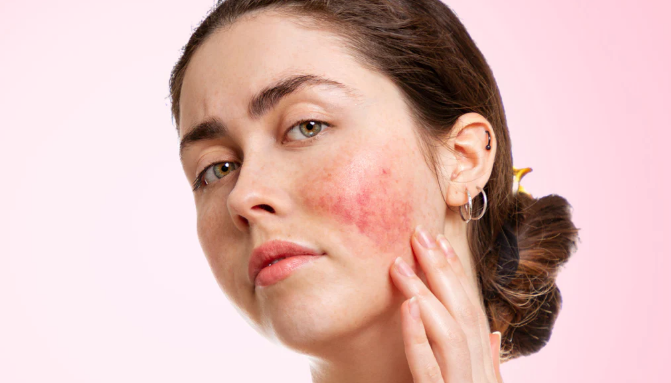
Rosacea
Rosacea is a common dermatological condition that primarily affects individuals with fair or white skin, often occurring in middle-aged women.
Rosacea, also known as acne rosacea, presents with the following symptoms:
- Redness in the central area of the face (nose, cheeks, chin, and forehead) accompanied by the appearance of visible blood vessels.
- Spreading and widening of the blood vessels, along with the presence of pimples or bumps in the affected area, often accompanied by enlargement of sebaceous glands, particularly on the nose, leading to disfigurement.
The exact cause of rosacea is unknown, but there is a genetic component, as it tends to run in families. It may also be associated with certain internal conditions such as hypertension or gastrointestinal inflammation. Sun exposure can exacerbate the condition.
Rosacea typically begins to manifest between the ages of 30 and 40 and tends to worsen with age. Although it predominantly affects women, severe cases with nasal disfigurement often occur in men.
The stages of rosacea can be divided into three categories based on disease severity:
1. Pre-rosacea stage: Characterized by intense redness in the central area of the face, temporary in nature, accompanied by the dilation of superficial blood vessels. This redness may occur with exposure to heat, sunlight, psychological stress, or hot beverages.
2. First stage: Persistent redness in the affected area.
3. Second stage: Appearance of pimples and bumps in the central area of the face, along with swelling or edema and thickening of the skin. Unlike regular acne, there are no blackheads or whiteheads present.
4. Third stage: Formation of large inflammatory bumps, resembling nodules, with skin fibrosis and enlargement of sebaceous glands, especially on the nose, resulting in a disfigured appearance.
There are different types of rosacea, including:
- Lupoid Rosacea: Resembles lupus and often affects the eyelids and the area around the mouth.
- Steroid Rosacea: Caused by the use of topical steroids and is accompanied by skin atrophy.
- Ocular Rosacea: Affects the eyes and requires a collaborative diagnosis between a dermatologist and an ophthalmologist.
- Rhinophyma: Enlargement of sebaceous glands on the nose, typically affecting men.
- Severe Rosacea (Rosacea Conglobata): Characterized by intense redness, blood-filled bumps, skin fibrosis, and atrophy.
- Rosacea Fulminans: A severe type with large, pustular inflammatory lesions on the cheeks, forehead, and chin, primarily affecting young women.
Treatment options for rosacea include topical medications, oral medications, laser therapy to improve redness and reduce skin irritation, and addressing concomitant conditions such as gastrointestinal or ocular inflammation. Following specific instructions, such as avoiding triggers and practicing gentle skincare, can also help manage the condition.